Guide
Showing different bodies with AI models, without a casting
By The AURA Studio team. Published .
AI can show your clothes on more than one kind of body without a casting, but only as wide as the references you give it. Left to defaults, image generators reproduce narrow body ideals, mostly young and white. Range comes from a tool's model roster or from photographing real people of different sizes with consent. And an AI body never wore your garment, so it is not a fit guide.
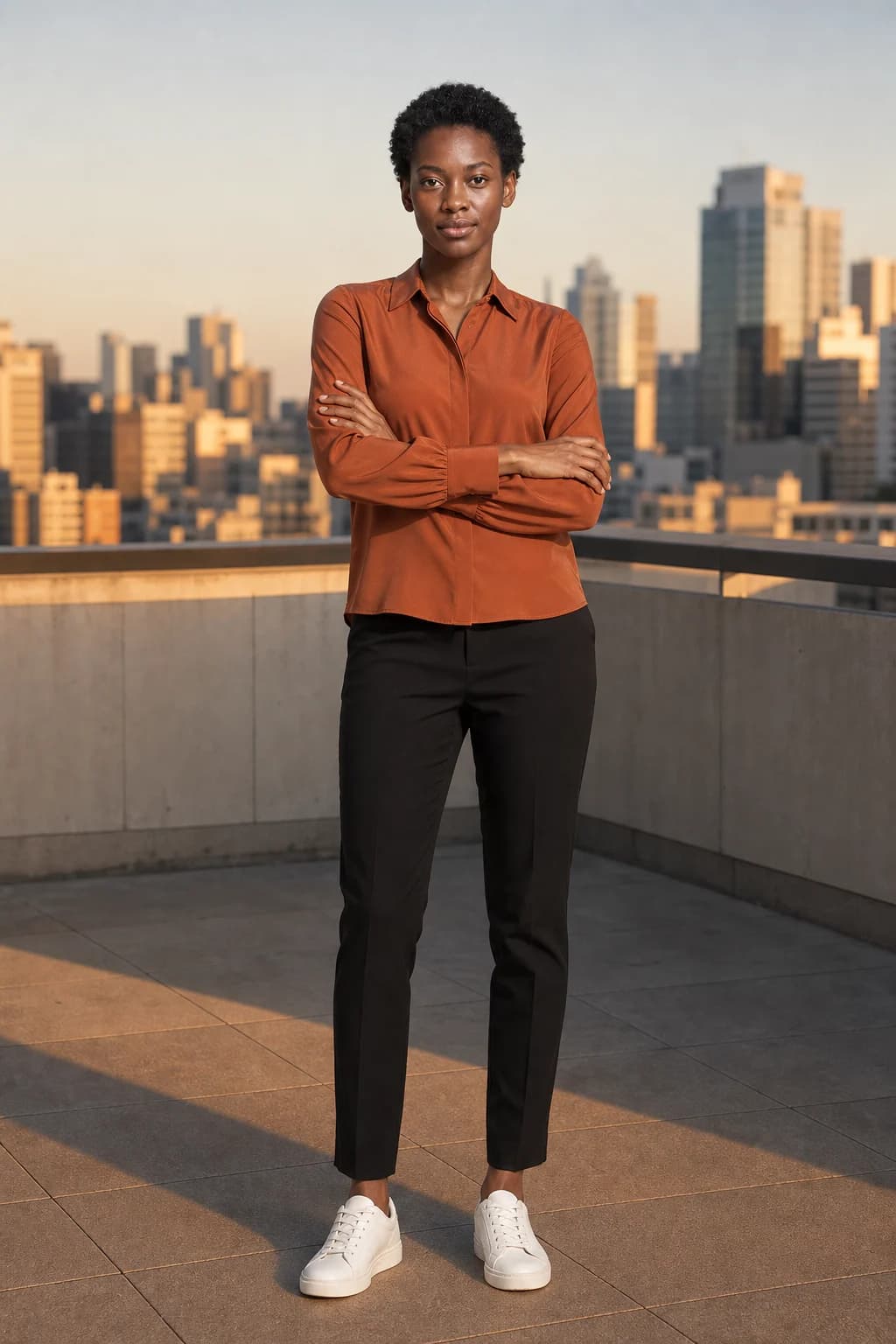
Why AI defaults to one kind of body
Ask an image generator for a person without describing one and it falls back on a default. A University of Toronto study coded 300 images of bodies from Midjourney, DALL-E and Stable Diffusion and found narrow western body ideals throughout: most images showed young, white bodies, racial and age diversity were minimal, and none showed a visible disability (University of Toronto, 25 November 2025; Psychology of Popular Media).
So range does not come from the defaults. It comes from what you hand the model: a photo of a specific person, or a precise description that you then check.
Three ways to show more than one body
| Route | How it works | Strength | Limit |
|---|---|---|---|
| Pick from a roster | Choose from a tool's library of AI models | Fast, and no consent paperwork when no real person is involved | You get the range the vendor built. Check sizes and ages before paying |
| Photograph real people | Upload one photo of each person and reuse it | Real bodies, including staff or customers | Needs written consent, and the tool must keep their build rather than slim it |
| Describe a new person | Generate a model from a written description | Any look you can describe | Drifts towards the defaults above. Check every image against the description |
Rosters vary widely. Botika describes its models as "diverse in tone, body and style" and says every one is fully AI-generated, with no real people behind them (Botika; Botika FAQs). WearView runs a dedicated plus-size page (WearView). Botika also offers a hybrid: upload a photo of someone wearing the garment and it keeps "the pose and body type" while replacing the person with an AI model.
Vendors also quote click-through gains from diverse models. Those figures come from their own case studies, not independent research, so we leave them out.
AURA's models, honestly
AURA Studio publishes this guide, so here is exactly what it offers. There are four house models, generated from short written casting briefs:
| Name | Gender | Age | Skin and hair |
|---|---|---|---|
| Lira | Woman | Mid-20s | Warm light-brown skin, dark brown shoulder-length hair |
| Nora | Woman | Late 20s | Fair skin, straight blonde hair |
| Ardit | Man | Late 20s | Olive-tan skin, short dark hair |
| Ben | Man | Early 30s | Medium skin, short dark hair, light stubble |
That is a narrow range. All four are adults between their mid-20s and early 30s. None was cast as plus-size, older or visibly disabled, none has deep skin, and the briefs say nothing about body size. References made from the same briefs for this site, below, are slim. If your customers look different, the house models will not show them.
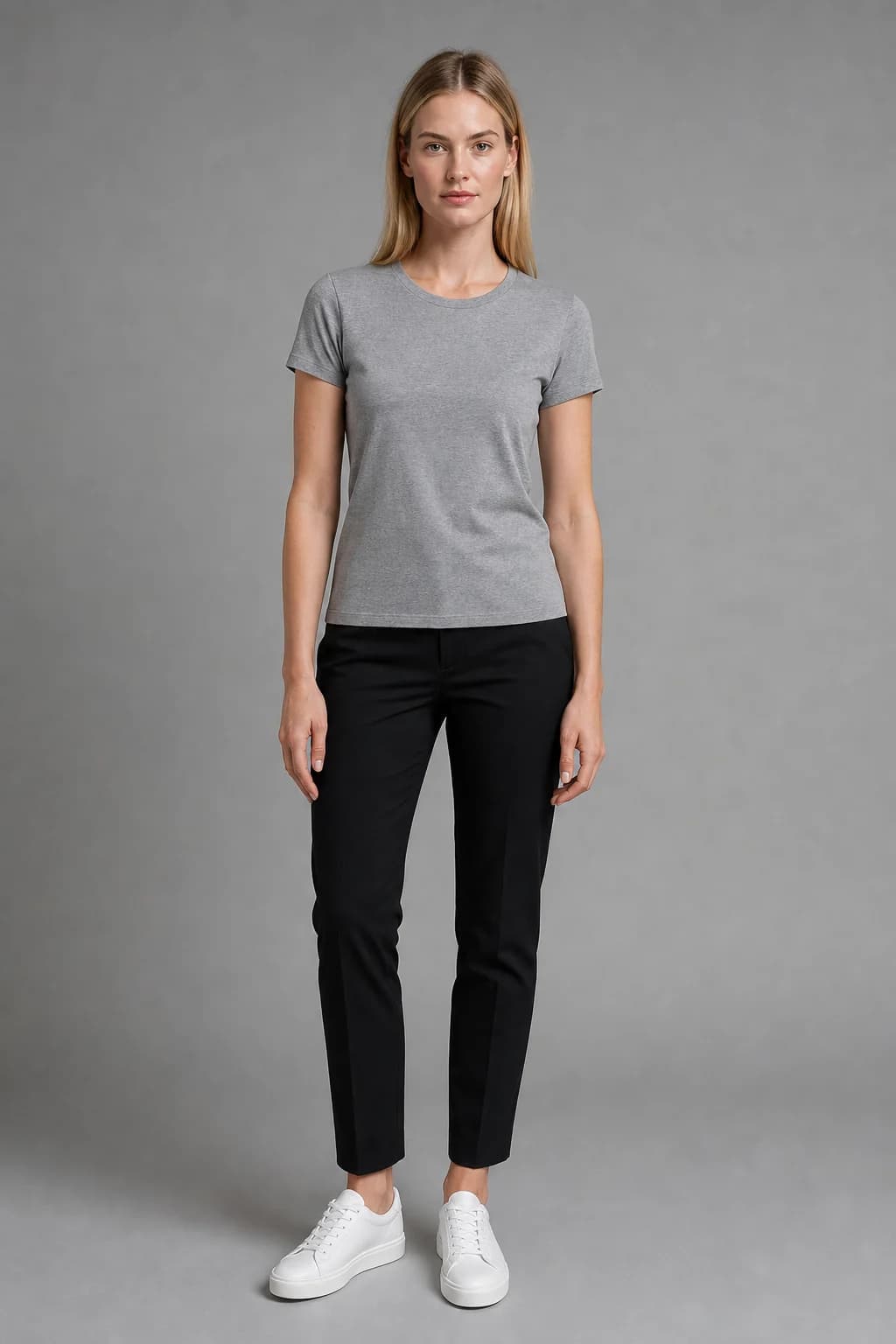
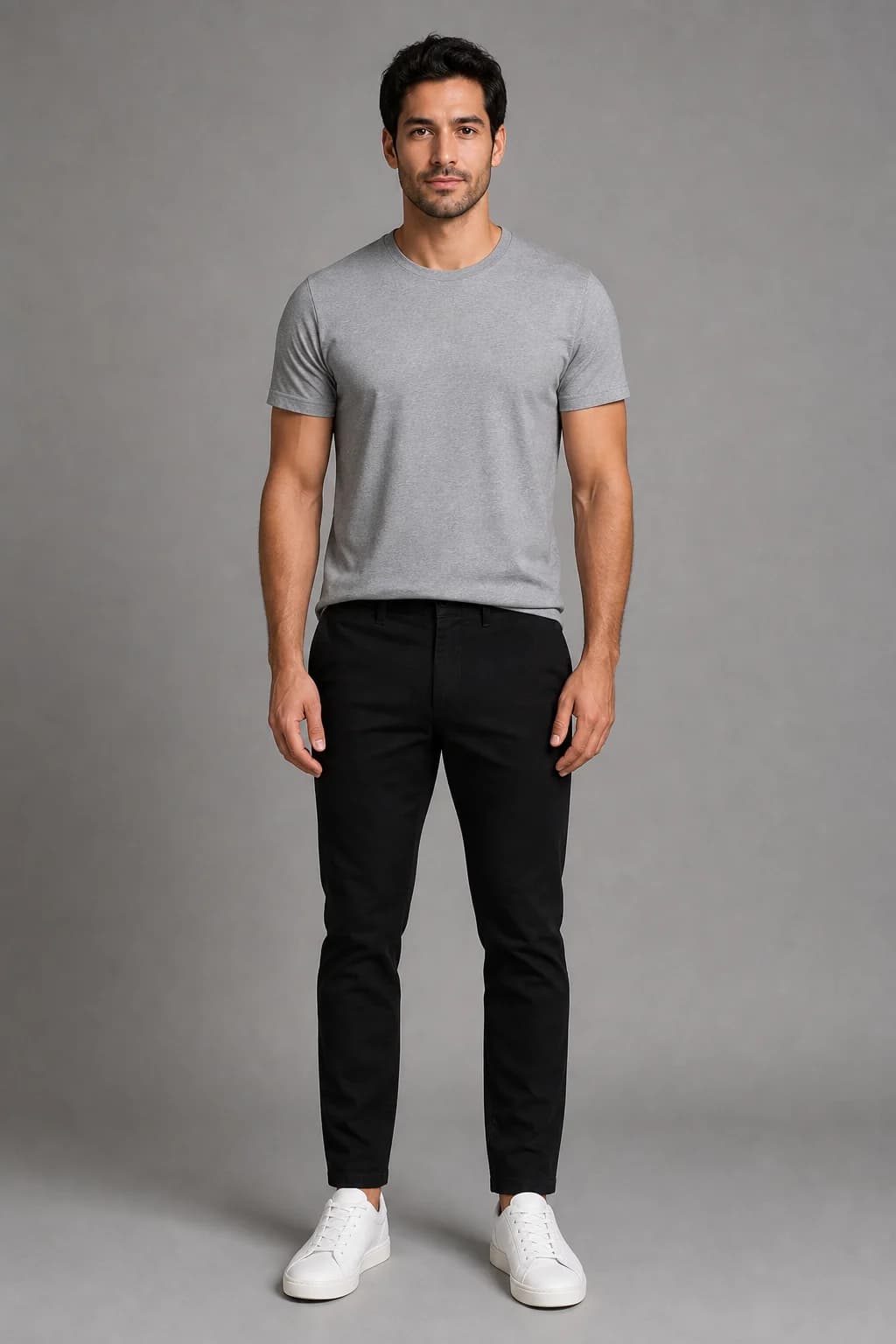
The route AURA supports for range is the second one: upload a photo of a person, and the same person comes back on every garment. Every photo generation tells the image model to keep the reference's "body build" and not to "beautify, slim, restyle, age, or otherwise change their identity". That is an instruction, not a guarantee, so compare each result with the reference, especially at the waist, arms and face.
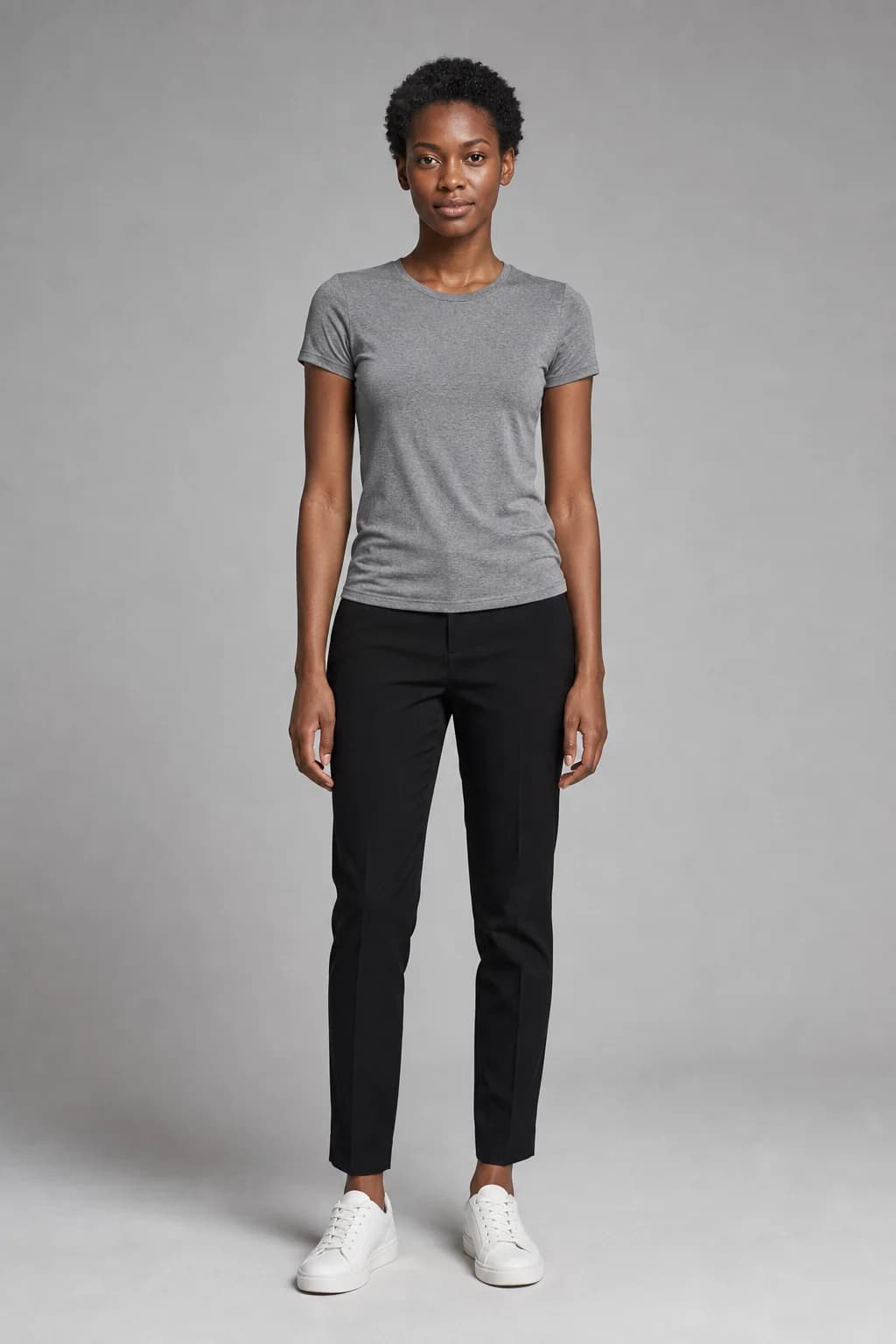
AURA has no roster beyond the four and no way to generate a new model from a description. If you need plus-size or older models and cannot photograph any, a tool with a wider roster is the better choice; check its gallery for the sizes you sell before paying. Our tool comparison is a starting point.
An AI body is not a fit guide
This is the line that matters most. When a real person wears a sample, the photo shows how that garment fits that body. When an image model draws a larger body in your dress, it invents the drape: the garment was never on that body, and the picture cannot tell a shopper whether it pulls at the hip or gapes at the neckline.
Baymard's usability research found that showing products on models of different sizes, with each model's measurements and the size they wear, helps shoppers judge fit. It also found that no tester was put off buying clothing by a lack of body-type diversity, and calls multiple models "an enhancement and not a necessity" (Baymard, 2020). Range helps, but only when the fit it shows is real.
- Use AI range for social posts, campaigns and mood, where the point is that more people see themselves.
- Use real people who wore the sample for any image that claims to show fit, and state their size.
- Never reshape a real model's body with AI and present the result as them.
What the first big brand to try it learned
In March 2023, Levi Strauss & Co. announced tests of AI-generated models from Lalaland.ai "to supplement human models, increasing the number and diversity of our models". Six days later it added an editor's note: "We do not see this pilot as a means to advance diversity", and said it was not scaling back live shoots or its commitment to working with diverse models (Levi Strauss & Co.).
The takeaway for a small brand: AI range is a way to show your clothes on more bodies than one shoot allows. Presented as a substitute for working with real, diverse people, it is the claim Levi's withdrew.
Rules and platform guidance
- France: commercial photos of models whose silhouette was slimmed or thickened with image-processing software must carry the words "Photographie retouchée". Fines run to €37,500 or 30% of the advertising spend (Code de la santé publique, Article L2133-2).
- Norway: since 1 July 2022, advertising in which body shape, size or skin was altered by retouching "or other manipulation" needs a standard label, including Instagram posts, stories and reels (Norwegian Consumer Authority).
- Amazon: its main-image rules for clothing ask for a standing model and add that it encourages showing "various physical mobilities and models who use assistive technology, such as wheelchairs and prosthetics" (Amazon).
- Consent: a photo of an identifiable person is personal data under the GDPR. Get written consent that covers AI generation; our consistent model guide covers what it should say.
Neither the French nor the Norwegian text addresses fully AI-generated people. Both are written for the riskiest use in this guide: taking a photo of a real model and changing their body with software. If you do that, label it. For AI-generated people in general, see our EU labelling guide.
Practical guidance written by a product team, not legal advice.
Sources
- University of Toronto: AI body images study (25 November 2025)
- Psychology of Popular Media: journal record
- Botika
- Botika: FAQs
- WearView: Plus-size
- Baymard Institute: Provide images of apparel on a human model (2020)
- Levi Strauss & Co.: LS&Co. partners with Lalaland.ai (with editor's note, 28 March 2023)
- Légifrance: Code de la santé publique, Article L2133-2
- Norwegian Consumer Authority: Guideline on labelling retouched advertising
- Amazon Seller Central: Product image requirements
Questions
- Can AI fashion models be plus-size?
- Yes, if the tool's roster includes plus-size models or you upload a photo of a plus-size person. Left to defaults, generators reproduce narrow body ideals, mostly young and white, according to a 2025 University of Toronto study. AURA's four house models were not cast as plus-size; you can upload your own model instead.
- How many house models does AURA have?
- Four: Lira and Nora, Ardit and Ben, two women and two men aged from their mid-20s to early 30s. Every new account also starts with one sample model, and you can upload a photo of anyone you have consent to use.
- Can I show how a garment fits different sizes with AI?
- Not honestly on its own. The AI invents the drape on a body the garment never touched. Use real people who wore the sample for fit images, and state their size, as Baymard recommends.
- Is it ethical to use AI models for diversity?
- It depends on the claim. Showing clothes on more bodies than one shoot allows is useful. Presenting AI range as a substitute for working with real, diverse people is the claim Levi Strauss & Co. withdrew in 2023, six days after announcing its AI model pilot.
- Do I have to label AI models or AI body edits?
- In the EU, the AI Act's transparency rules have applied since 2 August 2026. Separately, if you alter a real model's body, France requires "Photographie retouchée" on commercial photos and Norway requires its retouched-advertising label.