Guide
Do Amazon, Shopify, Etsy, Meta and TikTok allow AI model photos?
By The AURA Studio team. Published .
Mostly yes, with conditions, and Etsy is the exception. Checked 2 October 2026: Amazon wants files showing AI-generated people tagged in their metadata, Google Shopping wants AI metadata kept, TikTok wants AI content labelled, Meta labels AI images itself but requires a label on realistic AI video, Zalando wants invisible marking, and Etsy requires real photos of the actual item.

The short answer, platform by platform
Every rule in this guide comes from the platform's own policy or help page, read on 2 October 2026 and linked where it is used. We make an AI photo tool, so we have a stake in the answer being yes. Where a platform has not said something, this guide says so instead of guessing.
| Platform | Allowed? | What you have to do |
|---|---|---|
| Amazon (US and UK) | Yes, with a tag. The main image is the open question | Tag files showing a photorealistic AI-generated person with contains-synthetic-performer before upload |
| Google Shopping | Yes | Keep AI metadata in the file, such as IPTC Digital Source Type. No text overlays |
| Shopify | No rule of its own | Follow the rules of each channel you sync to, and the law |
| Etsy | Not as listing photos, on a plain reading | Use original photos of the actual item. Renderings are excluded |
| Instagram and Facebook posts | Yes | No label required for images. Realistic AI video must be labelled |
| Meta ads | Yes | Meta labels ads made with its own AI tools. Self-disclosure only for political and social-issue ads |
| TikTok posts | Yes | Label realistic AI-generated content |
| TikTok Shop (US) | Yes, if accurate | Disclose synthetic faces. Main image on pure white. No digital renderings of the product |
| Zalando (partners) | Yes, if believable and accurate | No visible AI label on the image. Invisible marking in the file by December 2026 |
These are platform rules. The law applies on top of them, wherever your buyers are: in the EU that is Article 50 of the AI Act, covered in our EU labelling guide. Nothing here is legal advice.
Amazon: tag AI-generated people in the file itself
Amazon's product image guide has an "AI-generated people disclosure" section. It says that "if your image includes photorealistic AI-generated people, you must tag that image with the appropriate metadata before uploading it to Amazon", and that Amazon will then add a disclosure for shoppers where applicable. The tag lives inside the file, not in the listing text.
- The tag
- The keyword contains-synthetic-performer in the file's XMP dc:subject field
- When to tag
- The image features people "entirely generated by AI (not based on a real person)"
- When not to tag
- Only real people, even if altered with AI tools; no people; people who are not photorealistic
- How
- macOS Preview (Keywords), Windows File Explorer (Tags), or exiftool; Amazon's help page shows all three
- Applies to
- Product images and video, on the US and UK seller guides
- Clothing main image
- Adult clothing on a standing model, pure white background, no text or price
Checked on Product image guide (US), Product image guide (UK), How to tag media with an AI-generated person, Image guidelines for clothing.
The distinction that matters for fashion is who the person is. A model generated from scratch, like a tool's house model, needs the tag. An AI image built from photos of a real person, such as your own model, falls under "real people (even if they have been altered with AI-powered tools)", and Amazon says not to tag it.
The open question is the main image. Amazon's clothing guidelines list "Sketches, drawing, or graphical representations" as prohibited and add "Only photos are allowed." Amazon does not say whether a photorealistic AI image counts as a photo for that slot. Until it does, the cautious setup is a real photograph in the MAIN slot and AI model images in the additional slots, tagged.
Amazon's own command-line example is: exiftool -XMP-dc:Subject+=contains-synthetic-performer image.jpg. Its page notes that running the command twice writes the keyword twice, so tag each file once.
Shopify and Google Shopping: the channel decides
Shopify has no rule about AI images. Its Acceptable Use Policy puts it plainly: "you're responsible for following the rules of your platform, your partners, and the law", and it adds that channel rules may apply. Shopify's own AI image editor, which changes backgrounds and lighting, applies "an invisible watermark" to every image it generates.
So for a store that also sells through Google Shopping, for example with Shopify's Google & YouTube app, the rule that matters is Google's. Google Merchant Center states that "all images created using generative AI must contain meta data indicating that the image was AI-generated", for example the IPTC Digital Source Type value trainedAlgorithmicMedia, and that you must not remove that metadata.
- Metadata
- Required on AI-generated images; IPTC Digital Source Type is Google's example
- Value to use
- trainedAlgorithmicMedia, defined by IPTC as media created by an AI model trained on captured content
- Overlays
- Disapproved: promotional text, calls to action, prices, added logos
- Shopify itself
- No AI image rule; channel and legal rules apply
Checked on Google Merchant Center: image_link, IPTC Digital Source Type vocabulary, Shopify Acceptable Use Policy, Shopify media generation.
The practical risk is losing the metadata without noticing. Compression apps, background removers and image CDNs can strip it on the way to your store. Check one finished file before you sync a whole catalog. Our list of AI photo apps for Shopify fashion stores covers the tools themselves.
Etsy: the strictest reading of all
Etsy's listing image rules do not mention AI at all, and they do not need to. They say Etsy requires "original photos of the actual product buyers will receive, not renderings or stock photos", and that for clothing made with a production partner you should "use a real photo of the physical end product." An AI image of a model wearing your piece is a rendering of the item, not a photo of it.
Etsy's AI disclosure rule is a different thing. Its Creativity Standards require sellers to disclose in the listing description when "an item is created with the use of AI". That covers AI-made products, such as AI artwork, not AI listing photos of a handmade or produced garment.
- Computer-generated mockups are allowed only in narrow cases: additional images for personalised items, and stock mockups for designs printed onto a base item.
- The safe reading for a clothing shop: real photos in the listing, AI imagery on your social channels and site instead.
Sources: Etsy listing image requirements, last updated 9 July 2024, and Etsy's Creativity Standards, both read on 2 October 2026.
Instagram and Facebook: images optional, realistic video required
Meta treats photos and video differently. For posts, it says it "does not require you to label images that have been created or altered with AI", but it does require a label on "photorealistic video or realistic-sounding audio that has been digitally generated or altered", and warns there may be penalties if you skip it.
- AI photo in a post
- No label required. Meta may add one if the file carries AI signals, including from third-party tools
- Realistic AI video in a post
- Label required before you share it
- Ads made with Meta's AI tools
- Meta adds AI info; next to Sponsored if the image has an AI-generated photorealistic human
- Ads made with other AI tools
- Meta does not apply AI info, per its help page
- Political or social-issue ads
- Advertisers must disclose digitally created or altered media
Checked on Instagram: label AI content, Meta: AI-generated images in ads.
The trap is the step after the photo. An AI on-model photo needs no label from Meta, but turning it into a short clip of the model moving makes it realistic AI video, which does. Use the AI label toggle when you post the reel.
TikTok and TikTok Shop: label it, and keep the product exact
TikTok requires creators "to label all AI-generated content that contains realistic images, audio, and video", either with the AI-generated toggle or with on-screen text, a sticker or a note in the description. It may also label content automatically when the file carries C2PA Content Credentials, and an automatic label cannot be removed.
TikTok Shop adds two seller-side rules. Its US AI content policy, dated 2 September 2026, allows AI content if it is transparent and accurate, says disclosure is "especially important" when content includes "synthetic faces, voices, digital humans, or highly realistic virtual figures", and bans using AI to change a product's size, colour, material or features. Its Product Listing Policy, dated 1 September 2026, governs the listing images themselves.
- Main image
- Pure white background, front physical view of the product
- Renderings
- "Placeholders and digital renderings of a product are not allowed"
- Other images
- May show usage scenarios, variations and styled scenes
- Overlays
- No added logos, text, borders, watermarks or graphics
- Videos and LIVEs (EU)
- AI content without clear disclosure is prohibited
Checked on TikTok: about AI-generated content, TikTok Shop US: AI content policy, TikTok Shop US: Product Listing Policy, TikTok Shop EU: AIGC.
TikTok Shop does not say whether an AI on-model photo counts as a "digital rendering of a product". The garment in it is re-drawn by the model rather than photographed, so the cautious setup matches Amazon's: a real photo on white as the main image, AI model shots among the styled images, and the AI label on any video.
Zalando: believable, unlabelled on the image, marked in the file
Zalando's partner image guidelines are the most detailed of any platform here. AI-generated content is accepted if it meets Zalando's editorial standard, and Zalando "reserves the right to reject any AI-generated assets that break believability, feature irregularities or fail to represent the product accurately."
- No visible AI labels: "We don't allow visible on-image labels like text overlays". Zalando also says not to supply content that requires visible labelling under applicable law, which it says includes deepfakes.
- Invisible marking, under a heading that says required by December 2026: identifying data "within the metadata or as an invisible watermark in the file code", kept intact through upload.
- Rejected distortions: wrong texture or material behaviour, misplaced buttons, warped logos, implausible lighting, and a model whose face or body changes across one product's image set.
- Video: low-quality AI footage with pixelation, motion blur or anatomical errors is not permitted.
That puts Zalando partners in an unusual spot: the platform rules out a visible label, so the image itself has to be one that does not need one under the law where it is shown. Read our EU labelling guide before sending AI model images to Zalando. Sources: Zalando image guidelines and video guidelines, read 2 October 2026.
The law sits on top of every platform
Platform rules are the floor, not the ceiling. In the EU, Article 50 of the AI Act has applied since 2 August 2026 and puts the disclosure duty on whoever publishes the image. Our EU labelling guide explains how to judge each asset.
In the US, New York's General Business Law section 396-b requires anyone advertising goods or services to "conspicuously disclose" a synthetic performer in an ad when they know it is there, with civil penalties of $1,000 for a first violation and $5,000 for each one after (NY Senate). Amazon's tag exists for laws like this: its guide opens with "Some jurisdictions may require disclosure".
One workflow that clears all of them
Keep one real photo of every garment
It fills the slots where platforms ask for a photograph: Etsy's listing photos, and the cautious choice for Amazon's MAIN image and TikTok Shop's main image on white. Our guide to photographing a garment covers a phone setup that also makes a good AI input.
Never let the AI change the garment
Colour, length, print, fabric and fit must match what ships. Amazon, TikTok Shop and Zalando all say so in their own words, and returns punish it anyway.
Mark the file before it leaves your computer
contains-synthetic-performer for Amazon when the person is fully AI-generated, IPTC Digital Source Type for Google Shopping and Zalando, and keep any C2PA credentials your tool wrote. Then check one uploaded file to see the marks survived.
Keep marketplace images clean
No prices, badges or promotional text. Amazon, Google and TikTok Shop all reject overlays, and Zalando rejects visible AI labels.
Label where people actually look on social
Use the AI toggle on TikTok and on Instagram reels made from AI images, and add a short caption line, such as "AI-generated model. The garment shown is the item sold.", for EU audiences.
Decide once per asset type
Write down which image types get which mark and label, so nobody decides post by post.
If you make the images in AURA
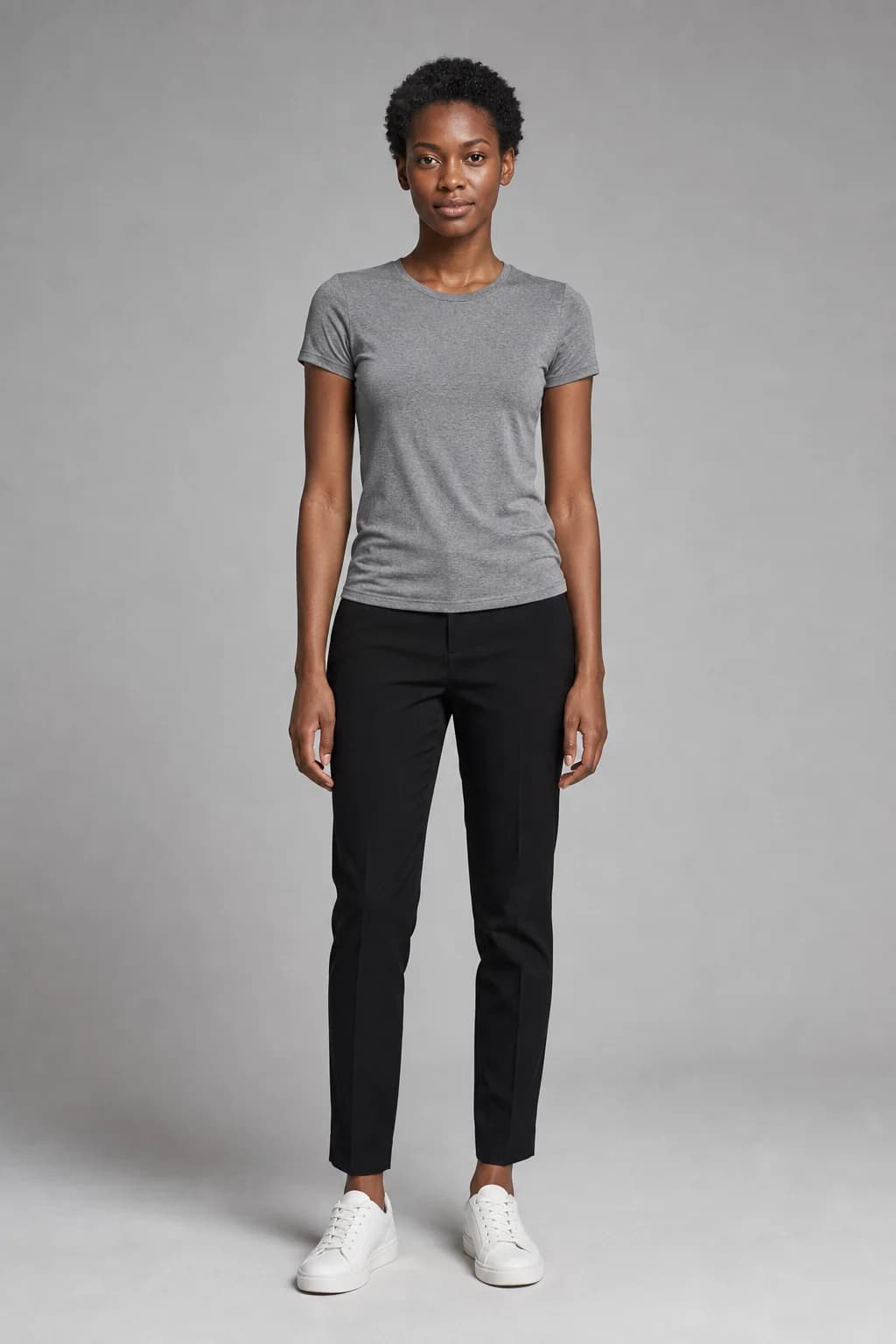
- AURA's four house models are AI-generated people, so images made with them need Amazon's tag. An image made from a photo of your own model shows a real person, which Amazon says not to tag; the EU question still applies.
- AURA does not write AI metadata into its downloads. Add the tags yourself before uploading to Amazon, Google Shopping or Zalando.
- Prices and badges added in AURA are for social posts. Marketplaces reject text on product images.
- AURA can redo a photo on a white background, but for Amazon's MAIN slot and TikTok Shop's main image we would still use a real photograph, for the reasons above.
Sources
- Amazon: Product image guide
- Amazon: How to tag media that contains an AI-generated person
- Amazon: Image guidelines for clothing
- Google Merchant Center: Image link [image_link]
- IPTC: Digital Source Type vocabulary
- Shopify Acceptable Use Policy
- Shopify Help Center: Media generation
- Etsy: Listing Image Requirements
- Etsy: Creativity Standards
- Instagram Help: Label AI content
- Meta: How AI-generated images in ads are identified and labelled
- TikTok: About AI-generated content
- TikTok Shop US: AI-Generated Content Restrictions and Requirements
- TikTok Shop US: Product Listing Policy
- TikTok Shop EU: Artificial Intelligence Generated Content
- Zalando: Image guidelines
- Zalando: Video guidelines
- New York General Business Law 396-b
Questions
- Does Amazon allow AI-generated model photos?
- Yes, as product images, but Amazon requires files that show a photorealistic, fully AI-generated person to carry the keyword contains-synthetic-performer in the XMP dc:subject field before upload. Images of real people edited with AI should not be tagged. Amazon's clothing rules say only photos are allowed for the main image, so a real photograph there is the cautious choice.
- Do I have to label AI product photos on Shopify?
- Shopify has no AI image rule of its own; its policy says you follow the rules of your channels and the law. If you sync to Google Shopping, Google requires AI-generated images to carry AI metadata, such as IPTC Digital Source Type, and forbids removing it. In the EU, the AI Act's disclosure rules apply as well.
- Can I use AI model photos on Etsy?
- Not as listing photos, on a plain reading of Etsy's rules. Etsy requires original photos of the actual product buyers will receive, not renderings or stock photos, and asks for a real photo of the physical end product for clothing made with a production partner. Its AI disclosure rule covers items made with AI, not listing photos.
- Does Instagram require a label on AI-generated photos?
- No. Meta says it does not require labels on images created or altered with AI, though it may add one itself if the file carries AI signals. It does require a label on photorealistic AI-generated video, so a reel made from an AI model photo needs one.
- Does TikTok Shop allow AI-generated product images?
- AI content is allowed if it is disclosed and accurate, and disclosure matters most for synthetic faces and digital humans. TikTok Shop's listing policy requires a main image on pure white showing the front of the product and bans placeholders and digital renderings of a product, so keep a real photo as the main image.
- Does Zalando accept AI-generated model images?
- Yes, if they are believable and accurate. Zalando rejects AI assets with distortions or inaccurate products, does not allow visible AI labels on images, and asks partners to embed AI marking in the file's metadata or an invisible watermark, under a heading that says required by December 2026.